Flash loans sound impossible. Borrow millions without collateral, use the funds, and pay everything back within seconds. No credit check. No approval process. Just pure code execution.
Yet this is exactly how flash loans work in decentralized finance. They represent one of the most innovative financial primitives blockchain has enabled, and simultaneously one of the biggest security headaches facing DeFi protocols today.
Flash loans are uncollateralized loans that must be borrowed and repaid within a single blockchain transaction. They enable arbitrage, collateral swapping, and self-liquidation, but also facilitate sophisticated attacks that have drained hundreds of millions from DeFi protocols. Understanding their mechanics is essential for anyone building, investing, or participating in decentralized finance ecosystems.
Understanding the mechanics of flash loans
A flash loan is a type of uncollateralized loan unique to blockchain environments. Unlike traditional loans that require credit checks, collateral, or lengthy approval processes, flash loans execute entirely within a single transaction block.
The concept leverages a fundamental property of how distributed ledgers actually work. Blockchain transactions are atomic, meaning they either complete entirely or fail completely. There’s no middle ground.
Here’s the process broken down:
- A borrower initiates a transaction requesting funds from a lending protocol
- The protocol transfers the requested amount to the borrower’s contract
- The borrower executes their intended operations with the borrowed funds
- The borrower returns the borrowed amount plus a small fee to the lending protocol
- The transaction completes and gets added to the blockchain
If step four fails, the entire transaction reverts. The borrowed funds never actually left the lending protocol. The blockchain state rolls back as if nothing happened.
This atomic execution creates a risk-free environment for lenders. They cannot lose funds because the transaction will only succeed if they receive full repayment.
Why flash loans require no collateral
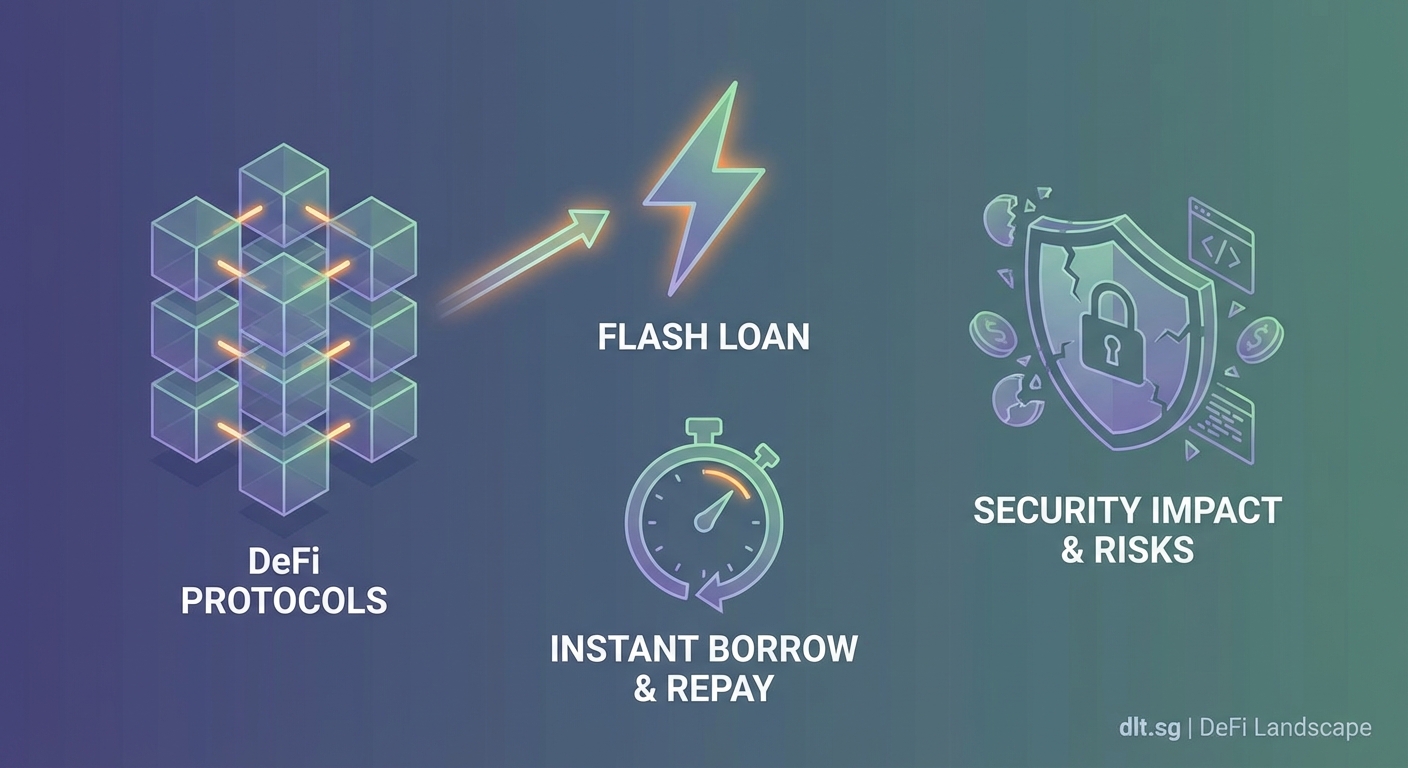
Traditional finance cannot offer uncollateralized loans at scale because time exists between borrowing and repayment. A borrower could take funds and disappear. Banks mitigate this risk through credit scores, collateral requirements, and legal enforcement.
Flash loans eliminate time as a risk factor. The loan exists for only milliseconds. The smart contract enforces repayment before the transaction finalizes.
This changes the fundamental economics of lending. Protocols like Aave, dYdX, and Balancer can offer massive loans to anyone without knowing their identity or financial history. The code guarantees repayment or reversal.
The fee structure reflects this reduced risk. Flash loan fees typically range from 0.05% to 0.09% per transaction. Borrowing $1 million costs around $500 to $900. Compare this to traditional unsecured loans with interest rates of 10% or higher annually.
Legitimate use cases that benefit DeFi
Flash loans weren’t designed for attacks. They serve several practical purposes in decentralized finance:
Arbitrage opportunities: Traders can exploit price differences across decentralized exchanges without holding capital. Borrow tokens, buy on one exchange, sell on another, repay the loan, and pocket the difference. All within one transaction.
Collateral swapping: Users can change their collateral type in lending protocols without first repaying their debt. Borrow funds, repay original debt, withdraw old collateral, deposit new collateral, take new debt, repay flash loan. This previously required significant capital or multiple risky steps.
Self-liquidation: Instead of letting liquidators claim your collateral at a discount, you can flash loan funds to repay your debt, withdraw collateral, sell it, repay the flash loan, and keep more value. This protects borrowers during market volatility.
Protocol migrations: Users can move positions between protocols atomically. No need to hold extra capital or expose yourself to price movements during the transition.
These use cases demonstrate how flash loans improve capital efficiency. They let users access liquidity for specific operations without tying up funds long-term.
How attackers weaponize flash loans
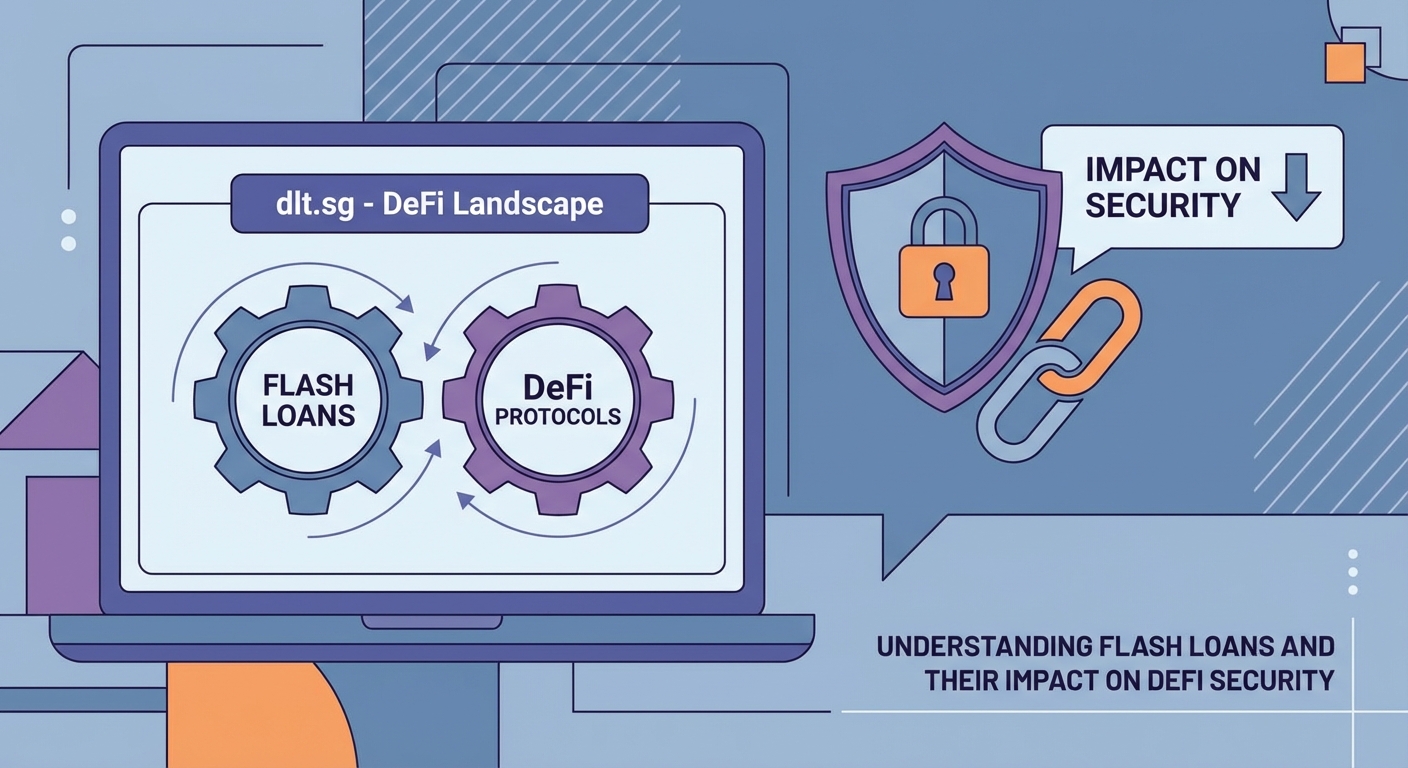
The same atomic execution that makes flash loans useful also makes them dangerous. Attackers use them to manipulate DeFi protocols in ways that would be impossible or prohibitively expensive otherwise.
Most flash loan attacks follow this pattern:
- Borrow massive amounts of tokens via flash loan
- Manipulate a protocol’s price oracle or liquidity pool
- Execute profitable trades based on the manipulated state
- Repay the flash loan and keep the profits
The attack succeeds or fails atomically. If any step fails, the entire transaction reverts and the attacker loses only gas fees. This creates a low-risk environment for experimenting with exploits.
Consider a simplified example. A lending protocol uses a decentralized exchange to determine token prices. An attacker could:
- Flash loan 10 million USDC
- Buy a large amount of Token X on the DEX, artificially inflating its price
- Deposit Token X as collateral in the lending protocol (now valued higher due to price manipulation)
- Borrow the maximum amount of other tokens based on the inflated collateral value
- Sell the borrowed tokens
- Repay the flash loan with profits remaining
The entire sequence executes in one transaction. The protocol never had time to update its price feeds or implement safeguards.
Common vulnerabilities flash loans exploit
Flash loan attacks typically target specific weaknesses in DeFi protocols. Understanding these vulnerabilities helps developers build more secure systems.
| Vulnerability Type | How It Works | Prevention Method |
|---|---|---|
| Price oracle manipulation | Attacker influences the data source used for price feeds | Use time-weighted average prices (TWAP) or multiple oracle sources |
| Reentrancy exploits | Contract calls itself before state updates complete | Implement checks-effects-interactions pattern and reentrancy guards |
| Liquidity pool imbalance | Massive trades distort automated market maker ratios | Add maximum trade size limits and slippage protections |
| Governance attacks | Flash loan tokens to gain voting power temporarily | Implement time-locks and snapshot-based voting |
| Collateral ratio manipulation | Inflate collateral value or deflate debt value temporarily | Use robust price feeds and add transaction-level checks |
The smart contract vulnerabilities that auditors look for often become more dangerous when combined with flash loan capabilities.
Real attacks that reshaped DeFi security
Several high-profile flash loan attacks have cost protocols and users hundreds of millions of dollars. These incidents forced the industry to rethink security practices.
PancakeBunny (May 2021): Attackers borrowed BNB via flash loan, manipulated the BUNNY/BNB price on PancakeSwap, and minted massive amounts of BUNNY tokens at an artificially low price. Loss: $45 million. The protocol relied on a single price oracle that could be manipulated within one transaction.
Cream Finance (October 2021): Attackers exploited a reentrancy vulnerability combined with flash loans to drain $130 million. They repeatedly borrowed and re-entered the lending function before the protocol updated its internal accounting.
Euler Finance (March 2023): One of the largest DeFi hacks at $197 million. The attacker used flash loans to exploit a flaw in the donation function, creating artificial debt positions and draining protocol reserves.
These attacks share common themes. They exploit protocol-level vulnerabilities that become catastrophic when combined with the massive, zero-cost capital that flash loans provide.
Building defenses against flash loan attacks
Protocols have developed several strategies to defend against flash loan attacks. No single solution provides complete protection, but layered defenses significantly reduce risk.
Time-weighted average pricing: Instead of using spot prices from a single transaction, protocols can implement TWAP oracles that average prices over multiple blocks. This makes single-transaction manipulation much harder.
Transaction-level restrictions: Some protocols limit how much a single transaction can borrow or trade. This reduces the impact of flash loan attacks while still allowing legitimate use cases.
Multiple oracle sources: Combining price data from several independent sources makes manipulation exponentially more difficult. An attacker would need to manipulate multiple systems simultaneously.
Snapshot-based governance: For voting systems, using historical token balances from specific block heights prevents flash loan governance attacks. Borrowers can’t vote with temporarily borrowed tokens.
“The best defense against flash loan attacks isn’t preventing flash loans themselves. It’s building protocols that maintain security properties regardless of how much capital flows through them in a single transaction.” – DeFi security researcher
The formal verification methods used for mission-critical contracts now routinely test for flash loan attack vectors.
Technical requirements for executing flash loans
Executing a flash loan requires programming knowledge and understanding of smart contract interactions. You can’t simply click a button in a wallet interface.
The process involves:
- Writing a smart contract that implements the flash loan receiver interface
- Defining the operations you want to execute with borrowed funds
- Ensuring your contract can repay the loan plus fees
- Deploying your contract to the blockchain
- Calling the lending protocol’s flash loan function
Here’s what a basic flash loan contract structure looks like:
- Import the lending protocol’s interfaces
- Create a function that requests the flash loan
- Implement the callback function that executes during the loan
- Add logic to perform your intended operations
- Calculate and approve the repayment amount
- Return funds to the lending protocol
Most flash loan attacks use custom contracts that combine multiple DeFi protocol interactions. The attacker tests their exploit on a forked blockchain environment before executing it on mainnet.
Building your first dApp provides foundational knowledge for understanding these contract interactions.
The role of flash loans in DeFi’s evolution
Flash loans represent both innovation and challenge. They demonstrate blockchain’s ability to create financial primitives impossible in traditional systems. Atomic execution, programmable money, and composable protocols enable entirely new economic activities.
Yet they also reveal how quickly innovation can outpace security practices. The DeFi ecosystem spent years building lending protocols, decentralized exchanges, and yield farming strategies. Flash loans exposed vulnerabilities in systems that seemed secure.
This tension drives progress. Each attack teaches the community about systemic weaknesses. Protocols implement better safeguards. Auditors develop new testing methodologies. Developers build more robust systems.
The Southeast Asian blockchain community, particularly in Singapore, has taken note. Singapore’s regulatory approach to DeFi now considers flash loan risks when evaluating protocol safety.
What developers need to know now
If you’re building DeFi protocols, flash loan security cannot be an afterthought. Every smart contract should assume attackers have access to unlimited capital for the duration of a single transaction.
Test your protocols under these conditions:
- What happens if someone borrows your entire liquidity pool?
- Can price feeds be manipulated within one transaction?
- Do state updates complete before external calls?
- Are there reentrancy vulnerabilities in any function?
- Can governance be hijacked with temporarily borrowed tokens?
The gas optimization techniques that reduce costs can sometimes introduce security vulnerabilities. Balance efficiency with safety.
Consider hiring auditors who specifically test for flash loan attack vectors. Many security firms now offer specialized flash loan security reviews as part of their audit process.
What investors should watch for
If you’re investing in DeFi protocols, flash loan security should factor into your risk assessment. Not all protocols are equally vulnerable.
Look for these positive signals:
- Use of time-weighted average price oracles
- Multiple independent price sources
- Recent security audits that specifically test flash loan scenarios
- Active bug bounty programs
- Transparent incident response plans
- Conservative collateralization ratios
Red flags include:
- Reliance on single price oracles
- Lack of transaction-level limits
- No recent security audits
- Complex, unaudited protocol interactions
- Governance systems without time-locks
The yield farming strategies that minimize risk account for flash loan vulnerability in protocol selection.
How flash loans fit into broader DeFi security
Flash loans are one attack vector among many. They often serve as an enabler for other vulnerabilities rather than being the vulnerability itself.
Think of flash loans as a force multiplier. A small protocol flaw might cause minimal damage under normal conditions. But give an attacker millions in temporary capital, and that same flaw becomes catastrophic.
This reality has changed how security researchers approach DeFi audits. They now test every protocol feature under the assumption of unlimited attacker capital. They look for state changes that can be exploited within single transactions. They verify that economic incentives remain aligned even under extreme conditions.
The automated market maker mechanics that power decentralized exchanges now incorporate flash loan protections at the protocol level.
Flash loans and the future of decentralized finance
Flash loans aren’t going away. They provide too much value for legitimate use cases. Arbitrageurs keep prices aligned across exchanges. Users manage their positions more efficiently. Protocols enable complex operations that would otherwise require significant capital.
The challenge is preserving these benefits while eliminating the attack surface. This requires better protocol design, more sophisticated security practices, and continued education for developers and users.
Some protocols are experimenting with flash loan fees that scale based on borrowed amount or implementing cooldown periods for certain operations after flash loans. Others are building insurance mechanisms that protect users from flash loan attacks.
The cross-chain smart contract developments introduce new complexity as flash loans could potentially span multiple blockchains simultaneously.
Making sense of flash loans in your DeFi journey
Flash loans represent a fundamental shift in how we think about lending, capital efficiency, and financial security. They prove that blockchain enables financial primitives that simply cannot exist in traditional systems.
For developers, they’re a reminder that security must account for extreme scenarios. For investors, they’re a risk factor to evaluate when choosing protocols. For the broader DeFi community, they’re both a powerful tool and a constant challenge.
Understanding flash loans helps you navigate DeFi more safely. You’ll recognize which protocols have implemented proper safeguards. You’ll understand why certain security practices matter. You’ll make more informed decisions about where to deploy capital and how to build secure systems.
The flash loan story is far from over. As DeFi evolves, so will the ways these instruments are used and abused. Staying informed about flash loan mechanics and security practices isn’t optional anymore. It’s essential for anyone serious about participating in decentralized finance.